• Skip to main content

Reading Catholic

Reading Catholic and catholic

  • Home
  • About
  • A Literary Pilgrimage
  • Book Group

Books for Kids

Big Ideas are Best in Small Doses {My November column @TheCatholicPost}

November 3, 2017 by Nancy Piccione

Following is my column that appears in this weekend’s print edition of The Catholic Post.

Let’s just be honest here.

I’m better at GK Chesterton in (very) small doses.

First, I love the great quotes characteristic of this prolific Catholic convert and early 20th century English writer:

“The reason angels can fly is because they take themselves lightly.”

“Gratitude is happiness doubled by wonder.”

“Fairy tales do not tell children the dragons exist. Children already know that dragons exist. Fairy tales tell children the dragons can be killed.”

“A dead thing can go with the stream, but only a living thing can go against it.”

I also enjoy some of Chesterton’s fiction, setting aside his “metaphysical thriller” The Man Who Was Thursday. That was tough to get through, but I have read it twice. I just couldn’t love it.

  • Probably Chesterton’s most accessible and recognized fiction is The Father Brown Mysteries. Both his unabridged ones and  The Father Brown Reader of stories,(and its sequel, The Father Brown Reader II) by Nancy Carpentier Brown, are very accessible and transmit Catholic and catholic virtues and values in an entertaining way.

As an aside, the recent BBC series (available on Netflix) based on the Father Brown stories is an extremely enjoyable show and in many ways captures the spirit, if not the letter, of Father Brown. The series is set in post-World War II, which makes it truly a loose adaptation, since Chesterton died in 1936.

But when I’ve tried to read one of Chesterton’s book-length non-fiction works, I get seriously bogged down in the sheer volume of thought. His writing meanders, and my mind wanders. I confess freely that I’ve never made it all the way through, with close attention, Orthodoxy, or indeed any book-length Chesterton work of non-fiction.

Surely I’m not the only one?


That’s why I love ABCs of the Christian Life: The Ultimate Anthology of the Prince of Paradox. It’s just as it sounds—short excerpts from G.K. Chesterton’s writings, each corresponding to a letter of the alphabet.

This well-planned book begins with a forward by the noted apologist and Boston College professor Peter Kreeft, who explains why Chesterton’s writing has stood the test of time, and what he has to say to us today.

Then, for each letter of the alphabet, there is a different topic, such as St. Francis for F; Insanity for I; Religions Compared for R; and Yes for Y. Each is a several-page, unabridged excerpt from one of Chesterton’s essays or books. It’s more meaty than a quote, yet not as overwhelming as a full-length book. Interested readers can see in the afterward where the excerpt first appeared, whether in his classic The Everlasting Man or one of his other books or writings.

Actually, this is actually the way Chesterton is meant to be read. He was chiefly an essayist and critic who published essays, reviews, and criticism in magazines throughout his career. That’s how he was known most during his lifetime, and it is in these shorter essays that he shines.

Reading ABCs of the Christian Life is a refreshing introduction or re-introduction to this perceptive writer and his enduring insights about human nature and living as a Christian in modern times.


You might also be interested in:

For someone who doesn’t “love” Chesterton in large doses, I have reviewed a lot books related to him:

*Here’s my review of Nancy Carpentier Brown’s The Woman Who was Chesterton, her sweeping biography of Chesterton’s wife.

*Here’s my review of The Chestertons and the Golden Key, a mystery imagined based on real-life friends of the Chestertons.

What are your favorite Chesterton or Chesterton-inspired works?

Share this:

  • Share on Pinterest (Opens in new window) Pinterest
  • Share on X (Opens in new window) X
  • Share on LinkedIn (Opens in new window) LinkedIn
  • Share on Facebook (Opens in new window) Facebook
  • Email a link to a friend (Opens in new window) Email
  • More
  • Share on Reddit (Opens in new window) Reddit
  • Share on Tumblr (Opens in new window) Tumblr

Like this:

Like Loading...

Staying Catholic Everywhere {My May column @TheCatholicPost}

May 5, 2017 by Nancy Piccione

Following is my May column that appears in this issue of the print edition of  The Catholic Post.

It’s graduation season, and time to consider gifts for students in your life. A new book, How I Stayed Catholic at Harvard: 40 Tips for Faithful College Students is a standout among potential gift book ideas. 

But despite its title, the book is not just for students going to Harvard, or students going to college, or students. It’s for everyone.

How I Stayed Catholic at Harvard is a genuinely helpful and charmingly written guide for anyone from high school on up, wanting to living a faithful, balanced, joyful Catholic life in the midst of our busy, diverse culture and world. As I look through all the quotes that I pulled from this book, each one is applicable and practical not just to students or grads, but to every Catholic.

How I Stayed Catholic at Harvard is written by Aurora Griffin, a recent Harvard graduate and Rhodes scholar. I would be inclined to buy this book just for the following quote, in which Griffin talks about distraction in prayer:

“A friend of mine once said that when we focus on the mystery in a decade of the Rosary, we give Mary a flower. When we get distracted, we give her a frog. That may be, but we are lucky that moms love us so much that they still like getting frogs.”

As you may be able to tell, the book is not written in a super-scholarly way, but informal and friendly, like a conversation with your bookish, agreeable friend who’s serious about her Catholic faith and wants to encourage you in yours.

How I Stayed Catholic at Harvard is full of great little nuggets of advice. For instance, in a brief discussion about fasting, Griffin makes the case that refraining from good things we like is not just a virtue and character building practice, but can also help open us to God’s grace:

“The important thing is that if you wish to grow in your spiritual life, you have to get used to saying no to yourself in small ways so that you can be open to God’s grace in big ways.”

After a basic introduction about Catholic life, the book is divided into four major sections: Community, Prayer, Academics, and Living it Out. Each of the 40 “tips” is in one of these four sections.

Griffin puts “Community” first because she considers it the most vital aspect of living out a Catholic faith. But that can be true in life in general—so many studies have shown that people do better in physical and emotional health with social support. She also encourages Catholics to recognize and embrace the diversity of how people live out their faith:

“If you find yourself in a leadership position in a Catholic organization on campus, you’ll need to accept that there are other ways of looking at the Faith apart from your own. If you try to force your views on everyone else, you will waste time and damage the community. Instead, try to appreciate the incredible diversity that comes from being part of the universal Church.”

What I love best about the book is that Griffin is intensely practical about so many things, and yet also calls readers to go deeper in their faith. Even for those who aren’t in college, being intentional about practicing faith is a big part of progress in the spiritual life. Griffin especially recommends a daily “routine of life” for prayer and spiritual practice.

In the tip, “Read Catholic Literature,” Griffin writes that “reading good stories makes us better people: it’s humanizing.”

While it is applicable to everyone, there is a lot of Catholic college-specific advice that is sound and important to consider. For instance, in the “Living it Out” section, Griffin writes about how living one’s faith can be a countercultural act:

“The secular world tells us that college is about getting all our wild days done with before we enter the real world and have responsibilities. It’s absurd, but I’ve even seen parents buy into this myth. The truth is that you never get to put real life on hold—not even in college. Your actions have as many, if not more consequences in college as they do later in life.”

I would consider How I Stayed Catholic at Harvard a great book not just for high school graduates, but those in college, as well as those earlier in high school, so they can begin to consider and integrate some of these ideas into their own developing faith life.

You might also be interested in:

I also highly recommend another book for college-bound students. It’s Your College Faith: Own It! by husband-and-wife team Matt & Colleen Swaim. You can read my reviews of this book here and here, among others. Turns out I’ve mentioned this book (and gifted it) a lot.

Share this:

  • Share on Pinterest (Opens in new window) Pinterest
  • Share on X (Opens in new window) X
  • Share on LinkedIn (Opens in new window) LinkedIn
  • Share on Facebook (Opens in new window) Facebook
  • Email a link to a friend (Opens in new window) Email
  • More
  • Share on Reddit (Opens in new window) Reddit
  • Share on Tumblr (Opens in new window) Tumblr

Like this:

Like Loading...

Gift Fiction Ideas for Christmas & Beyond

December 16, 2016 by Nancy Piccione

If you’re looking for ideas for a book gift for kids or adults, there are a lot of newer releases, as well as some old standbys, that could fit the bill. Here’s a round-up:

Treachery and Truth: A Story of Sinners, Servants, and Saints by Katy Huth Jones is a fictionalized account of “Good King Wenceslas,” the martyr Vaclav I, as told by his servant Poidevin. It would be great for middle-grade students on up, and is exciting as well as informative about the 10th century in Eastern Europe and Christianity’s spread there.

For even younger readers, The Wolf & the Shield: An Adventure with Saint Patrick by Sherry Weaver Smith and illustrated by Nicholas McNally, follows 11-year-old Kieran as he struggles between wanting the power of a clan leader, and learning about the goodness of St. Patrick and his faith. “What does your heart hunt for?” Patrick asks him, and his adventures in this book helps him discern the right path.

For fans of historical fiction, Ignatius Press has two newer releases that are satisfying for fans of historical fiction:

The Time Before You Die: A Novel of the Reformation by Lucy Becket, tells fictionalized stories about real-life people in 16th century England, a period when choices about living one’s faith were not just difficult, but life-altering.


General Escobar’s War: A Novel of the Spanish Civil War by Jose Luis Olaizola, and newly translated into English by Richard Goodyear, is a fascinating account of the real-life Antonio Escobar, a devout Catholic and faithful general who upheld his oath to support the legal government. His imagined “diary” as he awaits trial and execution from the new government is well-drawn depiction of life in that time and why people choose from among impossible options in wartime.

For Kindle readers, a formerly “local” writer, Angie Sue Dobbs, has published her first novel.
Perfect Timing: A Catholic Romance is the story of two young professionals wanting to find an honorable soul mate, and how they connect is by turns funny, sweet, and fairly realistic. The Catholic perspective of the characters, their friends and family members, is refreshing and natural.

Finally, here’s are a bonus of two family friendly read-aloud during the days leading up to Christmas:

Paraclete Press has a lovely new edition of A Christmas Carol, by Charles Dickens. Yes, we’ll be watching “The Muppet Christmas Carol” like many families, but nothing compares to reading the original. This handsomely formatted edition includes illustrations from the original 1843 edition. Try not to choke up as you read the last chapter.


Rumer Godden’s The Story of Holly & Ivy, her classic tale that I often recommend to people as a Christmastime read-aloud.

All of Rumer Godden’s books are tinged with a kind of melancholy joy, as well as a sense of wonder and magic of the everyday. That is what makes them so worthwhile to read. “The Story of Holly & Ivy” follows orphan girl Ivy as she tries to find “her grandmother” and develops a special relationship with Holly, a Christmas doll. In the hands of a different writer, it could be syrupy sweet, but Godden is a master of combining sadness with humor and eccentric characters in delightful and gripping stories.

Do you have any ideas of fiction gift books? What are the favorite perennial Christmas books at your house?

Share this:

  • Share on Pinterest (Opens in new window) Pinterest
  • Share on X (Opens in new window) X
  • Share on LinkedIn (Opens in new window) LinkedIn
  • Share on Facebook (Opens in new window) Facebook
  • Email a link to a friend (Opens in new window) Email
  • More
  • Share on Reddit (Opens in new window) Reddit
  • Share on Tumblr (Opens in new window) Tumblr

Like this:

Like Loading...

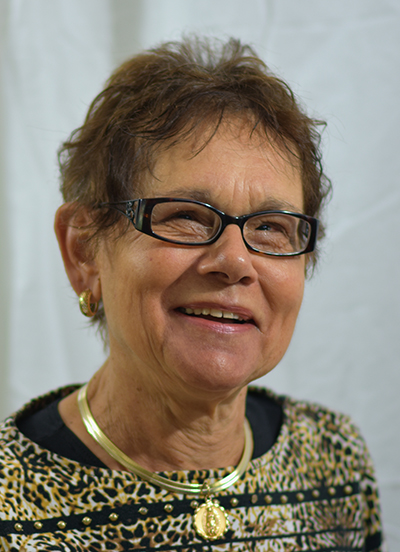
Meet a Writer: Marie Taraska {@TheCatholicPost}

September 6, 2016 by Nancy Piccione

DSC_0150 My headshot
This month, the book page of The Catholic Post features a local Catholic writer, her new book, More Than Heaven Allows, and her love of writing and reading.

How you know me: Most people know me as the Spanish teacher who taught at Peoria Notre Dame High. I also set up Spanish programs at St Mark’s School, St. Thomas School, St. Patrick School in Washington and St. Mary School in Metamora. I have also tutored the sisters from Mexico in English at the Spalding Center for many years.
Why I love writing: I have always loved writing. I write in a diary every day. I’ve also published two children’s books:Villie the Germ and The Crust Fairy. I’ve written many other children stories, had them professionally illustrated, and gave them to my grandchildren, who always have a lot to say about them. Since I was a teacher for nearly 30 years, my children’s books always teach a lesson. The Toe Ring and The No-No Boy were about some of my grandchildren.

My current book: More Than Heaven Allows was my first memoir/novel, and it’s the story of my and my husband’s life.

My journey begins with having met my husband in college and continues with our lives in medical school and through his residency with little money. It talks about the birth of our five children. It encompasses our struggles when a horrible explosion endangers the lives of two of our children leaving scars both physically and emotionally. The story continues with my journey of forgiveness, love, and faith in Our Lord and the family’s ultimate triumph over adversity.
What I’m writing now: I am working on another book about my husband’s life having grown up during the Depression and his endeavor to become a pathologist.

What I’m reading now: At present I am reading Treasure in Clay the wonderful autobiography of Archbishop Fulton J. Sheens life. I find it fascinating.

Share this:

  • Share on Pinterest (Opens in new window) Pinterest
  • Share on X (Opens in new window) X
  • Share on LinkedIn (Opens in new window) LinkedIn
  • Share on Facebook (Opens in new window) Facebook
  • Email a link to a friend (Opens in new window) Email
  • More
  • Share on Reddit (Opens in new window) Reddit
  • Share on Tumblr (Opens in new window) Tumblr

Like this:

Like Loading...

The Perfect Blindside by Leslea Wahl {Kidlit Corner}

August 31, 2016 by Nancy Piccione

It is really hard to get Catholic fiction “right” for younger readers, especially for tweens and teens. That’s why it is so satisfying to finish a book like The Perfect Blindside by Leslea Wahl.

The Perfect Blindside is a fast-paced mystery/romance told through the lives of two teens in a small Colorado town— Jake, an Olympic medalist snowboarder who’s new in town, and Sophie, an honor student who’s judgmental and skeptical of Jake’s intentions.  The book is an excellent novel, period, and it also happens to weave in Catholic themes.  That’s a win.

“Mystery” is the primary focus of the novel, as the two teens, often at odds, improbably work together to find out what’s going on in a nearby abandoned silver mine.  The romance is a subordinate, but lighthearted aspect.

At times, The Perfect Blindside reminded me of a Nancy Drew novels, which I adored as a young reader.  What I loved was all the excitement of solving a mystery by yourself, or with the help of a few trusted same-age friends.  When I began to introduce Nancy Drew to my children when they were young, I was momentarily horrified to see how much Nancy put herself and her friends in danger solving mysteries.  But the situations she puts herself in are so improbable that it’s not really an active inspiration to younger readers.  They just enjoy the stories and the excitement, as I did as a kid.

In the same way, the teens in The Perfect Blindside make over-adventerous decisions when it comes solving their mystery, but it’s so far “out there” that it wouldn’t inspire younger readers to be reckless in solving their own mysteries.  Instead, it’s just a diverting and an entertaining plot device to move the story along.

A “blindside” in snowboarding is a trick that a boarder makes without being able to see the path, and this book improvises on that theme to explore how the teens try to make their way without being able to see the path ahead.

While the primary enjoyment of this book is in the mystery and the perilous situations, it is also present in the very natural progress of both teens’ spiritual and emotional development.  Both Jake and Sophie learn where they’ve been wrong, where they can improve, and how to avoid rash judgment and rash decisions.  Catholic life and faith is woven seamlessly throughout the book without seeming “preachy” or moralistic.

Leslea Wahl has written in an interview (here) that she “simply wanted to write good, moral, young adult novels full of adventure and excitement.”  Consider that goal richly fulfilled in The Perfect Blindside.

Share this:

  • Share on Pinterest (Opens in new window) Pinterest
  • Share on X (Opens in new window) X
  • Share on LinkedIn (Opens in new window) LinkedIn
  • Share on Facebook (Opens in new window) Facebook
  • Email a link to a friend (Opens in new window) Email
  • More
  • Share on Reddit (Opens in new window) Reddit
  • Share on Tumblr (Opens in new window) Tumblr

Like this:

Like Loading...

Can’t We Talk About Something More Pleasant? {My August column @TheCatholicPost }

August 10, 2016 by Nancy Piccione

In a word, no.

Can’t We Talk About Something More Pleasant? is the title of an award-winning graphic novel/memoir by the artist and New Yorker cartoonist Roz Chast. It’s an amazingly funny, poignant, unapologetically honest account of the decline and death of Chast’s parents, and how she processed it both emotionally, physically, and artistically. If you’ve been through caring for elderly parents, you will find yourself nodding at this book.

For obvious reasons, the title of that book was prominently in mind when I began to review an important new book about at the scourge of pornography on our culture.

Believe me, I’d much rather talk about something more pleasant. As frequent readers of The Catholic Post  can tell from the books normally reviewed here, I genuinely try to focus on the positive aspects of life as a modern Catholic. And there is plenty of positive to focus on. But every so often, a cultural moment making it vital to tackle uncomfortable truths.

The tipping point for me was the open letter written and read in court earlier this year by the young woman who was raped by a student at Stanford University. The details of her account convinced me and many others that there is a huge crisis of depersonalization in our culture, and that sexuality is the center of that struggle.

If you don’t think this kinds of event is directly related to the epidemic of porn in our culture, you haven’t done even the tiniest bit of research on how pornography affects the brain, especially those of the young. And some of the generation growing up right now are, to put it mildly, adversely affected by easy access to pornography.

Cleansed: A Catholic Guide to Freedom from Porn by Marcel LeJeune is a sobering, but ultimately hopeful, book about the cancer that is pornography.

LeJeune works in college ministry—he’s the Assistant Director of Campus Ministry at St. Mary’s Catholic Center at Texas A&M University, the largest campus ministry in the country. LeJeune writes candidly about his own struggles as a young man with porn, but much more importantly, he writes both about the ways that people who struggle can break free from this pernicious addiction, as well as the ways people can avoid and help young people especially stay away from it.

Cleansed first outlines the incontrovertible evidence that pornography is highly addictive and corrosive to healthy relationships, families, and society at large, and why that matters. LeJeune then shares a Catholic vision of combatting porn, from virtue development, to accountability groups, to prayer and penance, to protecting those under one’s care. He points that in extreme cases, professional counseling may be needed, as porn is widely recognized as a “process addiction” such as gambling.

Cleansed isn’t just for those who struggle  with pornography. It’s also for parents who want to know how to keep kids safe from encountering pornography. Mostly, it’s for anyone who would want to be aware and equipped.

Because of the subject matter of a book like Cleansed, it’s obviously is not for young readers. Yet one of the key points of the book is keeping the very young from encountering and potentially becoming addicted to pornography online. LeJeune gives a lot of excellent advice for parents, including close monitoring of Internet use, a well-adjusted relationship, and a willingness to talk to young children candidly about the beauty of sexuality and how pornography distorts and even kills its healthy expression.

———-
For parents who want to talk about this sensitive area in a careful way with children of all ages, I highly, highly recommend Good Pictures, Bad Pictures: Porn-Proofing Today’s Kids by Kristen A. Jenson M.A. and Debbie Fox.

Good Pictures, Bad Pictures shares a large amount of information to help even very young children understand that “bad pictures” are out there, and it’s likely they will encounter them, but must work to keep away from them to grow up healthy emotionally, physically, and developmentally.

Parents should absolutely read the book first to decide how to present the material, but the narrative provides not just data about how pornography is freely available, but can be extremely damaging to children’s developing brains.

Even with the best internet filters, children may be in a situation where they encounter pornography or something that could lead them towards the damaging, hard-core images. Good Pictures, Bad Pictures helps children develop their own “internal internet filter,” and compellingly makes the case for why they should do so. The book offers a five-point CAN-DO plan to help kids who might accidentally encounter troubling images, and helps them have a pro-active stance towards internet use.

Healthy parents want for their children what’s best. And healthy parents want their children to grow up healthy in every way, so they can flourish in relationships, from friendships to marriage, and in every area of life. Giving children the tools strategies to do that is a gift parents can give in so many ways. Good Pictures, Bad Pictures, is a vital resource book for parents to help give that gift to their children.

Share this:

  • Share on Pinterest (Opens in new window) Pinterest
  • Share on X (Opens in new window) X
  • Share on LinkedIn (Opens in new window) LinkedIn
  • Share on Facebook (Opens in new window) Facebook
  • Email a link to a friend (Opens in new window) Email
  • More
  • Share on Reddit (Opens in new window) Reddit
  • Share on Tumblr (Opens in new window) Tumblr

Like this:

Like Loading...
  • « Go to Previous Page
  • Page 1
  • Page 2
  • Page 3
  • Page 4
  • Interim pages omitted …
  • Page 11
  • Go to Next Page »

Copyright © 2026 · Atmosphere Pro on Genesis Framework · WordPress · Log in

  • Home
  • About
  • A Literary Pilgrimage
  • Book Group
%d