• Skip to main content

Reading Catholic

Reading Catholic and catholic

  • Home
  • About
  • A Literary Pilgrimage
  • Book Group

The Catholic Post

The Essential Things: “Through the Year with Jesus” Offers Lovely, Useful Resource to Growth Faith & Community

January 21, 2021 by Nancy Piccione

Following is my book review column that appears in the current print edition of The Catholic Post. I welcome your comments!

Basics or Essential?

I wanted to write that Katherine Bogner’s new book is a “back to basics” approach to living out the Catholic faith, using liturgical seasons and weekly Gospel Readings as framework.


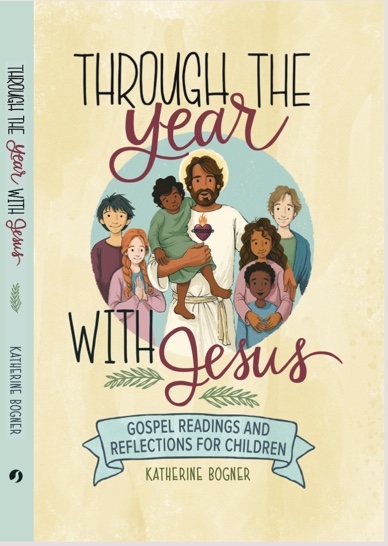
But that would underestimate the rich and multilayered resource that Bogner, a local teacher with a global reach online, has created in Through the Year with Jesus: Gospel Reflections and Readings.

“Essentials” might be a better term.
Katherine (Katie) Bogner is a multi-talented creative—she’s an artist, writer (she is a fellow member of The Catholic Post book review team), and religious catechist.

Locally, she serves as Junior High Faith Teacher at St. Philomena Parish in Peoria. But some may not know that Bogner is widely known and esteemed far beyond central Illinois.

That is because Bogner has spent the last decade creating excellent art, content, and ideas to countless teachers, catechists, and families (worldwide! that is not an exaggeration) at her website Look to Him and Be Radiant. Bogner also has a popular Instagram account (@katherine.bogner), sharing these web resources and her art.

Because of her wide influence and reach online, Emmaus Road Publishing editors reached out to Bogner to consider writing a book. Through the Year with Jesus is the fortunate result of this.

Through the Year with Jesus

The book contains seven sections—two for Ordinary time, one for the Sacred Triduum, and four for the remaining liturgical seasons: Advent, Christmas, Lent, and Easter.

Each section includes pages for the holy days and Sundays within that season, including weekly Gospel reflections, and at least one “Visio Divina”—a print of a classic work of sacred heart, along with a description and reflection questions.

Each Gospel reading is followed by several short elements: “Tell the Story”—describing the reading in context and incisive questions; “Live it Out,” with suggestions for incorporating the season into one’s daily life, and a “Lectio Divina” sidebar offering helpful prompts for the ancient practice of reading, meditating, praying and contemplating Scripture.

Visio Divina for Reflection and Prayer

The “Visio Divina” is one of my favorite parts of the book, offering helpful ways to engage with the Scripture art prayerfully.

So, for instance, in the season of Easter, one of the Visio Divina pages is at 17th century painting called “Landscape with Christ and His Disciples on the Road to Emmaus.” After an introduction, one question reads, “Would you want to get to your location quickly and invite Jesus to stay, or would you hope to linger and spend time together on the journey?”

Bogner’s appealing hand lettering and what she calls “liturgical doodles” appear sprinkled throughout the chapter titles, headings, and other places, lending a winsome touch. Readers of her website will be familiar with her distinctive style and appreciate the book’s similar feel.

Not just for families & classrooms

Bogner’s creative work online mainly assists families and fellow catechists and teachers for religious education and formation. But Through the Year with Jesus is even more widely relevant.

Though the book is family- and classroom-friendly, it is not family or classroom exclusive. Groups (such a small Bible study groups), individuals, and couples would also find Through the Year spiritually fruitful.

The book is easy to implement. Simply reading the Gospel, the “Tell the Story” reflection, and the “Live it Out” section, along with the Lectio Divina sidebar (perhaps while contemplating the artwork) itself would be a great preparation for Sunday Mass. Individuals can do this on their own or with a small group; classroom teachers can implement it, and families (and not just of young children, but all ages) would benefit enormously from this.

This kind of multi-faceted resource is especially important when people cannot attend Mass in person, as is common during our current time.

Catholics can derive spiritual benefit from developing the practice of reading and reflecting on the Gospel and readings ahead of Sunday’s Mass. Through the Year with Jesus makes it enjoyable, comprehensive without being overwhelming.

What’s great? The book is not pegged to a particular calendar year or cycle, so is flexible enough to allow readers to engage with it as much or as little as time allows, year after year.

Bogner’s book is a beautiful gift to everyone!

Share this:

  • Share on Pinterest (Opens in new window) Pinterest
  • Share on X (Opens in new window) X
  • Share on LinkedIn (Opens in new window) LinkedIn
  • Share on Facebook (Opens in new window) Facebook
  • Email a link to a friend (Opens in new window) Email
  • More
  • Share on Reddit (Opens in new window) Reddit
  • Share on Tumblr (Opens in new window) Tumblr

Like this:

Like Loading...

“Humility Rules” Offers Timeless, Convivial Advice

October 6, 2020 by admin

The members of my family, God bless them, have to put up with me sharing so many personal development tips, tricks, and hacks. 

I really, truly enjoy books, articles, and podcasts about ways to improve one’s time management, relationships, energy levels, and much more. If you’re a person like me, you know what I mean, and how much you love to share what you are learning.

But depending on the source, there is something missing from “self-improvement” references, and I try to incorporate Catholic belief and practice into these often helpful guides. (That is why a book like The Mindful Catholic is especially helpful, integrating our Catholic faith & practice with evidence-based information about the benefits of mindfulness, because God made us that way).

A recent book that also integrates these themes well is the engaging and well-written Humility Rules: Saint Benedict’s Twelve-Step Guide to Genuine Self-Esteem, by J. Augustine Wetta, O.S.B. 

Fr. Wetta, a Benedictine monk of St. Louis Abbey in St. Louis, is a longtime writer and teacher.

Self-improvement gurus might recoil at the word “humility” in the title, but rightly understood, it is the key to holiness and happiness. 

As Fr. Wetta writes, humility is:

 “not focused on the self at all, but on how to relate to one another and to God in light of our strengths and weaknesses… (S)such clarity of vision begins to develop only when you take the focus off yourself and devote yourself body and soul to a higher purpose. … Genuine self-esteem is a form of holiness.”

Humility Rules is a modern take on The Rule of Saint Benedict, the famous sixth-century plan of life for monks. Since that time, countless religious communities have used The Rule as a basis for their communal life. Even families and small groups use The Rule to help organize their life along Christian and practical human principles. 

At first glance, Humility Rules seems to be the antithesis of the self-improvement or personal development genre. 

Indeed, Fr. Wetta’s modern “description of Saint Benedict’s “Ladder of Humility” begins with rules that are the opposite of the typical, Disney-movie type advice. For example, Step 2 is “Self-Denial,” and its description is “Don’t be true to yourself.” And Step 3, “Obedience,” is “Don’t follow your dreams.”

But that’s what makes “Humility Rules” so refreshing and versatile: a keen sense that what is most important in “personal improvement” is not one’s self, but a dependence on God, healthy awareness of our own shortcomings, a willingness to keep trying; and optimism and confidence in that knowledge.

“Humility Rules” structures itself around Saint Benedict’s “Ladder of Humility,” (a chapter within “The Rule”) twelve virtues that help promote holiness and flourishing.

Each chapter of the book covers a virtue, with an introduction, and stories and thoughts about the virtue in thought, word, and deed.

Fr. Wetta’s style is conversational and accessible without being too simplistic, likely because of his work as a high school teacher and coach. 

This highly readable quality makes the book ideal for young people; or— let’s be honest—for many of the rest of us who wish for more manageable reading during these Covid days when attention spans have been shortened.  

In the section, “Fear of God”:

“So yes, it’s better to love God; but when you are not feeling the love, at least try to feel the fear.. .. it’s not the ideal, but it’s a start.”

Prudence:

“A prudent person knows when to keep an open mind, and when to close it.”

Silence:

“When you meet a wise person, listen to him and you will learn wisdom; when you meet a foolish person, listen to him and you will learn patience; when you are alone, listen to God, and you will learn everything else.”

Each chapter section ends with “homework.” So, for instance, in “Fear of God in Deed” the homework reads: “Secretly do someone else’s chores.” In “Perseverance in Thought,” — “Spend the whole day without correcting anyone.”  The homework offers great small, manageable ideas.

In an unusual feature, Humility Rules includes charming illustrations. 

Every few pages contains an illustration, either a painting or icon, with a subtle something extra added—-something you might not even notice. For instance, on the front cover, Saint Benedict is holding a skateboard. In a portion of an illustrated manuscript, a monk is shown speaking on a cellphone. In another illustration, monks ride a rollercoaster, in a mash-up of a photo and artwork. And the artwork was created by the author using works from museums & churches around the world. (The cover image was created by the author’s mother, a well-known painter).

There are so many good, quotable sentences and passages in Humility Rules. Readers who delve into the book will encounter many of those.  Here is one from the section “Reverence,” an appropriate “last word” in these strange times:  

“Let the name of Jesus be that silver bell for you—a reminder of who you are, where you stand, and what you stand for. Then, in the midst of all the chaos of life, when you start to feel lost, just whisper that name, and it will bring you back to yourself.”

Share this:

  • Share on Pinterest (Opens in new window) Pinterest
  • Share on X (Opens in new window) X
  • Share on LinkedIn (Opens in new window) LinkedIn
  • Share on Facebook (Opens in new window) Facebook
  • Email a link to a friend (Opens in new window) Email
  • More
  • Share on Reddit (Opens in new window) Reddit
  • Share on Tumblr (Opens in new window) Tumblr

Like this:

Like Loading...

Extraordinary Times Call for Extraordinary Calm

April 10, 2020 by Nancy Piccione

Following is my column that appears in the current print edition of The Catholic Post.

Years ago, in a column here, I told the story I love about St. Charles Borremeo, the16th century saint and archbishop.

The story goes that he was playing cards with two priest friends. Someone near them asked what they would do if they knew the end of the world were to happen within an hour.

One priest said, “I would run to Church to be with our Lord.” The other priest said, “I would call upon the name of the Lord.”

St. Charles Borromeo said, “I would finish this game of cards.”

A few years ago, thinking of that was a nice reminder that if one’s life is well-ordered, whatever we are doing at the moment can be the right thing.

But thinking of that story during our extraordinary times is another thing.

Right now we see our world—not end, perhaps, but change in dramatic and enduring ways.

It is normal and even healthy to have genuine worries and concerns about what the coronavirus means for our families, our health care system and our world in the coming weeks and months.

But at the same time, we all would do well to pray (on repeat) the Serenity Prayer: “God, grant me the serenity to accept the things I cannot change, the courage to change the things I can, and the wisdom to know the difference.”

How do we achieve—or renew—that serenity? Many saints and other holy people struggled with distractions (think St. Therese of Lisieux) or “wandering of the mind” (St. Teresa of Avila), so those of us who do so as well are in good company.

We are fortunate that in our Catholic faith offers so many opportunities to reflect on beautiful things, from mysteries of the Rosary to Scripture to holy art. But what is a way to improve our attention to the present moment so we can focus on those?

A new book, The Mindful Catholic: Finding God One Moment at a Time, (and a companion children’s picture book) used evidence-based research to improve mindfulness and attention for the reader, from a Catholic perspective.

“The Mindful Catholic,” written by Dr. Gregory Bottaro, a clinical psychologist and director of the Catholic Psych Institute, is a helpful resource that demonstrates how mindfulness practiced from a Catholic perspective can be spiritually and psychologically fruitful. That is especially helpful in these unprecedented times.

“(M)indfulness does not mean turning off the thoughts in your mind, but using them a a door to greater awareness of yourself.”

-Dr. Gregory Bottaro, The Mindful Catholic

This quote shows one of the ways that Catholic mindfulness is vastly different from Eastern-based forms of meditation. The latter often instructs people to “empty” their minds. As Catholics, “we want to fill our minds with reality,” says Bottaro.

Practicing mindfulness is what actually changes a person’s brain, so the book offers exercises at the end of each chapter for readers to use to exercises and meditations.

Practicing mindfulness is what actually changes a person’s brain, so the book offers exercises at the end of each chapter for readers to use to exercises and meditations.

Surely I am not the only person whose mind wanders during a Rosary, Mass, or another prayer. Rather than getting frustrated with this wandering or “autopilot” mode, mindfulness allows for awareness of this, and tips to practice mindfulness.

Dr. Bottaro explains often that acceptance is key to encountering mindfulness—not fighting against our thoughts but having curiosity, and gently turning our thoughts back to what we intend, such as prayers that we are.

The Catechism of the Catholic Church even addresses distraction in prayer and how that “turning back” is a key part of prayer:

“The habitual difficulty in prayer is distraction. It can affect words and their meaning in vocal prayer; it can concern, more profoundly, him to whom we are praying, in vocal prayer (liturgical or personal), meditation, and contemplative prayer. To set about hunting down distractions would be to fall into their trap, when all that is necessary is to turn back to our heart.”

–Catechism of the Catholic Church 2729

The Mindful Catholic is full of research and other information about why mindfulness—“paying attention the present moment, without judgment or criticism” is so healthy for humans, and how God made us this way. Bottaro also offers exercises to practice every day to increase a readers ability in this area.

One phrase Dr. Bottaro repeats often and encourages readers to adopt, is “Ever-present God, here with me now, help me to be here with you.”

I have found both the written book and the audio book very helpful in different aspects of practicing mindfulness, and being aware of my thoughts without fighting them, as well as staying in the present moment.

Peter Kreeft, the prolific Catholic author and philosophy professor at Boston College, wrote the foreward. In his characteristic sensible style, he endorses the book as a way to help focus on prayer. “You can’t focus on God if you can’t focus,” Kreeft writes, and he is right.

The Mindful Catholic also includes two appendices—one an exploration of how mindfulness is eminently consistent with our Catholic faith & practice, of a Novena of Surrender to the Will of God.

There is also a companion book for children. It’s called, Sitting Like a Saint: Catholic Mindfulness with Kids, and Bottaro and his wife Linda—also a psychologist— co-authored this work. The book explores mindfulness helps kids to be calm even in the midst of chaos.

What I love best about this book is it really provides easy, bite-sized meditations for families to read through and pray to help calm and . Even though we do not have any little kids any more, both teens and adults at our house have found these brief reflections both calming and meditative as a precursor to prayer, or just to be a calming interlude in our day.

Share this:

  • Share on Pinterest (Opens in new window) Pinterest
  • Share on X (Opens in new window) X
  • Share on LinkedIn (Opens in new window) LinkedIn
  • Share on Facebook (Opens in new window) Facebook
  • Email a link to a friend (Opens in new window) Email
  • More
  • Share on Reddit (Opens in new window) Reddit
  • Share on Tumblr (Opens in new window) Tumblr

Like this:

Like Loading...

The Miracle in Bonnie Engstrom’s Awe-Inspiring Book is (Very) Local

October 1, 2019 by admin

Following is my column that appears in the current print edition of The Catholic Post.

Bonnie Engstrom’s new book is literally awe-inspiring.

61 Minutes to a Miracle: Fulton Sheen and a True Story of the Impossible is part page-turning medical mystery story; part spiritual memoir, about faith, acceptance, and openness to the Holy Spirit; and part primer on the fascinating process of “saint-making” in the church.

“61 Minutes to a Miracle” is— true to its title—about Engstrom’s son James, who was born without a heartbeat and remained so for 61 minutes. Miraculously, he also did not suffer any brain damage or lasting effects from the trauma of his birth. The Engstrom family, friends, and people worldwide prayed for the intercession of Venerable Fulton Sheen, a Peoria diocese native, to heal James. Vatican approval of that miracle paved the way for Bishop Sheen’s beatification.

Full disclosure: at the time the miracle happened, I knew and had worked with Engstrom on several projects. We lived in nearby towns, so I got updates in real time as it was happening. So to read the amazing events in book form, told in Engstrom’s engaging voice, was both a bit of “deja vu” and a wonderful way to relive that incredible time.

There have been a few times when I have relatively close knowledge of something described in a book or online, and it irks me when details are changed. I understand why sometimes the narrative flow of a story means times might be conflated together or some details changed, but I still find it bothersome.

That is most certainly NOT the case for 61 Minutes to a Miracle. Everything is written exactly as it happened, as I heard about the story through Engstrom herself and many other local sources at the time. And because the events described are so amazing, it is reassuring to have minor (and of course major) details be accurate.

The honesty of the book is perhaps because, as described in 61 Minutes to a Miracle, the Engstrom family went through the process of the cause for beatification and canonization of Fulton Sheen. In those proceedings, literal truth is needed, and those interviewed in the case have to testify and swear that they are telling the truth.

But the book is not just a dry accounting of the medical facts or specific chronology. Because Engstrom writes in such a natural, candid voice, this book becomes a way for readers to join in the spiritual pilgrimage of the Engstrom family, and all those around them, as they experienced life, pregnancy, learning about saints, losing a child and then gaining him back, and just living life well.

How they managed to walk through this harrowing experience, through the grace of God, the help of their friends, family, and medical team, is the center of this book.

Probably my favorite part of 61 Minutes to a Miracle is how Engstrom likens her son James’ story with that of Lazarus from the Gospel of John. That is partially because the raising of Lazarus is replete with so many details to meditate on related to the mystery of life and death. And it may also be because I love St. Martha dearly, and her profession of faith (“You are the Christ, the Son of God”) to Jesus when he came to raise Lazarus is a particularly poignant moment in the life of Jesus.

It is also lovely that the miracle leading to Sheen’s beatification should not only occur in his home diocese, but also that Sheen, one of the most media-savvy people of his time, should intercede in a case whose prayer requests spread widely due to media. That is, specifically, social media, as Engstrom is a popular blogger and active online in Catholic spheres.

It is a kind of “virtuous circle” for Sheen to reach out to Engstrom in the healing of James, and Engstrom honors Sheen and makes him even more well known because of the miracle.

As Engstrom writes about why the miracle would have happened in their family, “It was Jesus Christ who brought James Fulton back to life. It was Christ’s death and resurrection that conquered death once and for all. I do not know why it happened this way. The only answer I can give is probably the only answer I should be concerned with: the glory of God.”

Reading 61 Minutes to a Miracle helps the reader explore the mystery of why miracles happen; how God can move in the hearts and lives of everyone; and how intercession to the saints is good for us and for our world.

Share this:

  • Share on Pinterest (Opens in new window) Pinterest
  • Share on X (Opens in new window) X
  • Share on LinkedIn (Opens in new window) LinkedIn
  • Share on Facebook (Opens in new window) Facebook
  • Email a link to a friend (Opens in new window) Email
  • More
  • Share on Reddit (Opens in new window) Reddit
  • Share on Tumblr (Opens in new window) Tumblr

Like this:

Like Loading...

A Different Kind of Conversion Story

June 1, 2019 by Nancy Piccione

Following is my column that appears in the current print edition of The Catholic Post.

Nearly three years ago, 85-year-old priest Fr. Jacques Hamel was martyred by two Islamic state terrorist while he was celebrating daily Mass at the parish in Normandy, France, where he lived as a retired priest. I vividly recall how moved I was by the accounts of him, and his witness to the faith. Like many Catholics wondered if I could have done the same.

Shortly after Fr. Hamel’s martyrdom, new stories shared that Wall Street Journal reporter Sohrab Ahmari, a secular Iranian-American, announced on Twitter his conversion to Catholicism because of Fr. Hamel’s witness. 

Wow! I remember thinking. How amazing that an old priest’s martyrdom could inspire a Muslim-born Iranian to convert.

The true story of Ahmari’s conversion (and the tweet—which he deleted soon deleted after it went viral because of how it was misreported) is far more compelling.

From Fire by Water: My Journey to the Catholic Faith is Ahmari’s spiritual memoir of what really happened, from his. and far more interesting than I, and many others, initially thought.

As Ahmari writes in the preface,

“Catholicism was the destination I reached after a long, circuitous spiritual path. That path cut across my Muslim background and Iranian heritage, to be sure, and then in turn shaped its course. But it wasn’t as if I had been praying to Allah one day and the next day accepted Christ as my savior. My Internet cheer squad craved precisely this simplistic narrative, which Twitter, with its tendency to flatten human experience into readily digestible memes, supplied.”

“(M)y becoming Catholic had something to do with being Iranian- and Muslim-born but that it was ultimately a response to the universal call of grace.”

This book is fascinating because Ahmari’s story is so different than the typical American conversion story. But even though the biographical details are unusual, his story shares elements that are shared in most, if not all, conversion stories. 

Chief among these is an attraction to the good, the beautiful, and the virtuous, that helped him accept a universal standard of good and evil.  That gradually drew him towards God and living a life of faith.

He was raised in Iran by non-religious and inattentive parents, and his sharp communications skills made him seem older and wiser than he was.  And this lack of virtue development didn’t help him become better. As he writes, ““I wanted to be “good.” But I came to associate being good with wowing adults.”

After he and his mother emigrated to the United States when he was a teenager, his high intelligence allowed him to “coast” through high school and even college, without learning critical thinking skills, and helped him easily conform to the worst of the prevailing secular culture. 

He participated in the Marxist movement in college, only giving it up when he realized that while the principles seemed sound, it was a movement of not the working class as it proclaimed, and that “the full-time socialist life was possible only for the children of the upper-middle class.”

One of the chief themes of From Fire by Water is the idea that it’s not just good enough to be intellectually brilliant and insightful. One must also have and practice virtue. In short, you can’t just be smart. You have to be good, too.

This is most illustrated in the story of Ahmari’s fellow co-worker when they were together in the Teach for America program. (Teach for America is a program that enlists recent college grads to teach for several years in schools in low-income rural & urban communities.)

This co-worker worked long hours and was a tough but fair teacher. A the same time, and unlike his fellow teachers, he refused out of principle to advance kids who were not doing well enough. Instead, this teacher spent extra time with them and held them to his high standards. This did not endear him to others, but caused him to be out of favor with his higher-ups and even his fellow teachers. 

As Ahmari met and encountered people who practiced the virtues even in hard circumstances (eventually, learning of Fr. Hamel’s heroic virtue in martyrdom), he recognized his own lack of good character, and tried with limited success to remedy that. 

This search for integrity led him to spend time in a Catholic church in Manhattan, where he encountered Jesus in the Eucharist. Like many, he experienced powerfully God’s presence. After a long time, and even after more twists and turns, Ahmari converted to Catholicism in London.

Back in the day when blogs were much more popular, I followed many blogs of Catholic moms. And we moms struggled mightily to name our blogs, and rename when necessary. Mine was the name of a Rich Mullins song, probably dating me, but I don’t care.

One mom I followed named her blog “Heaven, not Harvard.”

For some reason this always bothered me. I thought, “But why can’t you have both?” Because of course you can (and recently I reviewed a book on that very premise, “How I Stayed Catholic at Harvard,” by a recent Harvard graduate who found a way to live our her faith in a robust wa.).

Reading From Fire by Water helped me to remember that high intelligence and a strong faith are not mutually exclusive, and can be a powerful combination.

The book also helped to confirm the importance of trying our best, with God’s grace, to live lives of virtue. We never know how we might be affecting the people around us, or the seeds we are planting by our consistency in doing the right thing, especially when it’s difficult.

Most of all, From Fire by Water helped me to reflect on the ways that everyone’s faith journey is just that—a journey. We lifelong Catholics may not have the dramatic conversion odyssey of a Sohrab Ahmari, but our faith, and our relationship with Christ and His Church, changes through the years. 

Share this:

  • Share on Pinterest (Opens in new window) Pinterest
  • Share on X (Opens in new window) X
  • Share on LinkedIn (Opens in new window) LinkedIn
  • Share on Facebook (Opens in new window) Facebook
  • Email a link to a friend (Opens in new window) Email
  • More
  • Share on Reddit (Opens in new window) Reddit
  • Share on Tumblr (Opens in new window) Tumblr

Like this:

Like Loading...

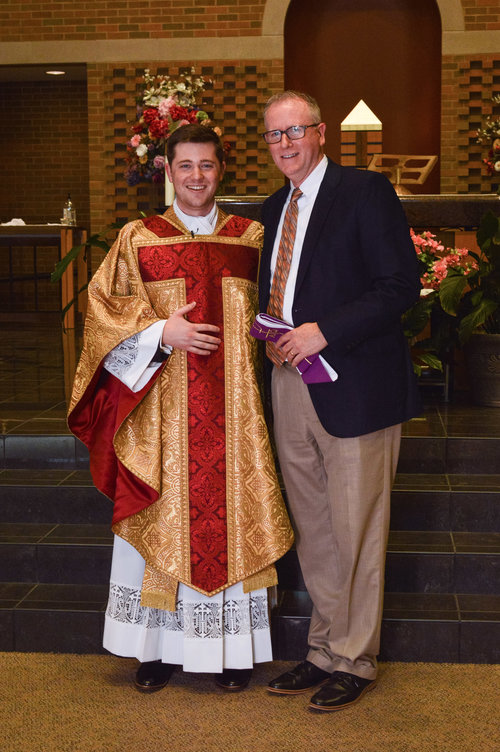
Meet a Reader: Fr. Andru O’Brien {@TheCatholicPost}

August 4, 2018 by admin

Following is the “Meet a Reader” feature that appears in the current print edition of The Catholic Post.

How you know me:

I am Fr. Andru O’Brien, one of the two men that Bishop Jenky ordained this past May. I am now serving at St. Jude Parish in Peoria. I graduated in 2010 from Normal Community and immediately entered seminary. During summers I have spent time in Peoria, LaSalle, Pontiac, Monmouth and Oglesby. For school, I was sent to Immaculate Heart of Mary Seminary in Minnesota, Mundelein Seminary in Chicagoland, and then I finished my studies off at Mount St. Mary’s in Maryland. If one were to go back through all the seminarian posters from my time, they would notice a year I do not appear. I spend a year studying with the Archdiocese of Atlanta where my family lives, but immediately came home earning me the affectionate nickname amongst some of our older priests of “The kid who left and came back.”


Why I love reading:


When one sits down to write, the pages serve as a blank canvas. The boundaries are non-existent and the possibilities endless. The only thing an author puts down on the page is what moves them at the deepest level. Always approaching books with this mindset, reading has become for me an encounter with another’s most personal experience of reality. And when reading is done well, it also becomes a dialogue between the author and us. In non-fiction I always ask if my experience confirms what the author is saying or not. In fiction we are able to enter into the mind of a character to feel what they are feeling. While most modern entertainment has become a break from life, reading has always been more attractive to me because it allows me to engage life on an even deeper level.


What I’m reading now:  

I always have a few books going at a time. Right now I have going a biography of Don Luigi Giussani, the founder of the ecclesial community Communion and Liberation. For spiritual reading I am working through St. Gregory the Great’s Pastoral Rule. On the fiction side, I am reading Michael O’Brien’s Sophia House. This is the prequel to a trilogy focused around a priest named Father Elijah.

O’Brien is a master of character development, and this book is entirely devoted to the early life of Father Elijah. Growing up as a young Jewish boy, he escaped the Nazis and ended up in Israel where he would discover Catholicism and the Carmelite Order before being called to Rome on a special mission for the Pope. The storyline shows a young boy’s exposure to good and evil in a dramatic way that makes it difficult to put down.

Along with Sophia House, I am also reading A Devotional Journey into the Mass by my old professor Christopher Carstens. In it he breaks open the various parts of the Mass to show how one can more fully answer Vatican II’s call for ‘active participation’ in all the faithful. He successfully shows that Mass is only boring when we do not understand what is actually happening before us.

My favorite book:

It is difficult to name just one book as my favorite, so here is an overview of the favorites. Anything by Pope Benedict XVI is amazing, but topping the list are his work The Spirit of the Liturgy and the Jesus of Nazareth trilogy.

A book that I have found myself going back to again and again is Becoming Human by Jean Vanier. Vanier is a philosopher by trade, who left his position at university to work with the disabled in his organization L’Arche. In this work, he speaks of the lessons that he has learned from his time with the L’Arche community. To a world filled with competition and individualism, he shows a Christian perspective of human life and flourishing. It is absolutely brilliant.

Finally, I will throw out Brave New World by Aldous Huxley. In this book, Huxley depicts a society free of pain and full of stimuli, but when one character breaks from the mold he discovers a world much greater than the ‘perfect’ society he had previously known.

Share this:

  • Share on Pinterest (Opens in new window) Pinterest
  • Share on X (Opens in new window) X
  • Share on LinkedIn (Opens in new window) LinkedIn
  • Share on Facebook (Opens in new window) Facebook
  • Email a link to a friend (Opens in new window) Email
  • More
  • Share on Reddit (Opens in new window) Reddit
  • Share on Tumblr (Opens in new window) Tumblr

Like this:

Like Loading...
  • « Go to Previous Page
  • Page 1
  • Page 2
  • Page 3
  • Page 4
  • Interim pages omitted …
  • Page 29
  • Go to Next Page »

Copyright © 2026 · Atmosphere Pro on Genesis Framework · WordPress · Log in

  • Home
  • About
  • A Literary Pilgrimage
  • Book Group
%d