• Skip to main content

Reading Catholic

Reading Catholic and catholic

  • Home
  • About
  • A Literary Pilgrimage
  • Book Group

The Catholic Post

Memento Mori, or We Are All Going to Die {My March column @ The Catholic Post}

March 2, 2015 by Nancy Piccione

Following is my March column, that appears in this weekend’s print edition of The Catholic Post.

While listening to a radio story recently reporting the “death rate” for those who exercise was reduced by some very high percentage, I actually laughed out loud—what could the reporter possibly mean? 

Even I, an avid runner, am unconvinced.  Everyone, whether the person perfects couch-potato status or completes Ironman triathlons, is going to die.  We are all called to be good stewards of life, but there is no way to reduce the 100 percent death rate among humans.

It may seem like a downer, but memento mori —basically, “remember you are going to die”— is not something to fear, but something to embrace, especially during this season of Lent. “Remember you are dust, and to dust you shall return,” we are told as we receive ashes on Ash Wednesday. 

Many people today— with good reason—are concerned about, and even fear, the dying process and what can be highly-medicalized end-of-life care. An excellent new book, Atal Gawande’s Being Mortal: Medicine and What Matters in the End, offers much food for thought to understanding the way we die in our current culture, and what we should change about it.

Gawande is a surgeon who’s written several popular books, including the acclaimed The Checklist Manifesto: How to Get Things Right that posited how airline checklists could be successfully applied to health care and other fields, with great success.

In Being Mortal,  Gawande uses stories, statistics, and history, to get at why and how we die in the 21st century.  It is both fascinating and a little frightening.  He shares stories of his own patients and family members, and of how he, as a physician, has gotten it right and wrong with patients and loved ones about their end-of-life journeys, not just from a medical, but a human perspective.

He shares what he has learned from others in medicine, bioethics, hospice, and philosophy, and offers not so much a how-to, but a blueprint for people to begin discussions about how they’d like to live at the end of life.

Gawande is not Catholic, but in many ways Being Mortal  is a deeply Catholic (and catholic) book.  He is a gifted writer, and reflects on the nature of dying and of living well, chiefly through the concept of ars moriendi, or “the art of dying.”  (Ars moriendi was first popularized in a series of books about dying well written by late medieval Catholic monks.)  Gawande applies this beautifully when he stresses, over and over again, the interconnectedness of human life:

“Our lives are inherently dependent upon others and subject to forces and circumstances well beyond our control.  Having more freedom seems better than having less.  But to what end?  The amount of freedom you have in your life is not the measure of the worth of your life.  Just as safety is an empty and even self-defeating goal to live for, so ultimately is autonomy.”

Being Mortal is not a perfect book, nor is it fully Catholic—Gawande implies a qualified support of doctors writing prescriptions to terminally ill patients, but he calls that “not a measure of success… it is a measure of failure.”  His support of this is so uncharacteristic, since the vast majority of the book is respectful and life-affirming on the value of living and dying well, compatible with a Catholic vision of the truth and infinite worth of human lives.

For a more explicitly Catholic perspective on death and dying, consider Susan Windley-Daoust’s Theology of the Body, Extended: The Spiritual Signs of Birth, Impairment and Dying. 

Windley-Daoust, a professor at St. Mary’s University in Wenona, Minnesota, has written a careful and wide-ranging analysis of how St. John Paul II’s “Theology of the Body” relates to birth (she writes of childbirth, “it is charged with the Holy Spirit”), those who encounter or experience disability, and those in a dying process.  She, too, shares how the Catholic vision of ars moriendi can shape a spiritually healthy and integrated life.

Yes, it’s theology, but very accessible to mere mortal readers (like me!).  She shares stories and practical applications about how we live our faith through our bodies.

Clearly, Being Mortal and Theology of the Body, Extended were not written together, but they can be read as companion books.  Both books reflect, from somewhat different, but complementary, approaches, on the immense value of human life and human connection, even and especially in our most vulnerable moments.

Read both books this Lent, and start some great discussions with your loved ones about memento mori.
Share this:

  • Share on Pinterest (Opens in new window) Pinterest
  • Share on X (Opens in new window) X
  • Share on LinkedIn (Opens in new window) LinkedIn
  • Share on Facebook (Opens in new window) Facebook
  • Email a link to a friend (Opens in new window) Email
  • More
  • Share on Reddit (Opens in new window) Reddit
  • Share on Tumblr (Opens in new window) Tumblr

Like this:

Like Loading...

Meet a Reader: Katie Race {The Catholic Post}

February 4, 2015 by Nancy Piccione

Following is the monthly feature that appears in the print edition of The Catholic Post, featuring a Peoria diocese reader.

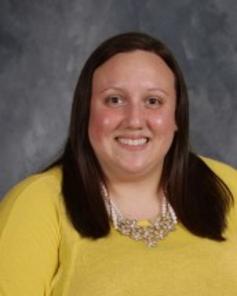
KRace

How you know me:

I teach Spanish at The High School of St. Thomas More in Champaign, and I teach first-year CCD at my parish, St. Matthew’s in Champaign. 

Why I love reading:

For me, reading is like traveling (which I also love!).  I can learn about new ideas and perspectives, get to know interesting individuals, enjoy beautiful language, and unwind.  Above all, I love reading, particularly spiritual reading, because I can get to know Jesus better and His Church.  I love pondering over a passage before the Blessed Sacrament and asking Jesus what He wants me to know.    

What I’m reading now:


Diary: Divine Mercy in My Soul by St. Faustina. My friend and colleague Sr. M. Mercedes Diaz suggested I read this book and I’m so grateful she did.  I’m fascinated by St. Faustina’s encounters with Jesus and all the graces and mercy He pours out to us.  A coworker is also reading this and so it is fun to discuss it with her.

My favorite books:


Story of a Soul: The Autobiography of St. Therese of Lisieux, by St. Therese of Lisieux: I’ve been intrigued by St. Therese ever since I was a child.  Her child-like simplicity and approach to our Lord inspires me.  Reading it really kick-started my spiritual journey.  I find myself rereading many parts.


Trustful Surrender to Divine Providence: The Secret of Peace and Happiness by Fr. Jean-Baptiste Saint-Jure and St. Claude La Colombiere: This is a small yet mighty book.  It opened my eyes to what surrendering entails and how one can go about that.  God always provides!


When I Was Puerto Rican: A Memoir by Esmerelda Santiago.  This is a coming of age and American dream story of a girl who grows up in primitive conditions in Puerto Rico and later graduates from Harvard University.  Her storytelling is captivating and full of emotion, taking you in the “in between” of two cultures.

Share this:

  • Share on Pinterest (Opens in new window) Pinterest
  • Share on X (Opens in new window) X
  • Share on LinkedIn (Opens in new window) LinkedIn
  • Share on Facebook (Opens in new window) Facebook
  • Email a link to a friend (Opens in new window) Email
  • More
  • Share on Reddit (Opens in new window) Reddit
  • Share on Tumblr (Opens in new window) Tumblr

Like this:

Like Loading...

“The Great Reformer” is the Definitive Pope Francis Biography {My February Column @The Catholic Post}

February 3, 2015 by Nancy Piccione

Following is my February column that appears in this week’s print edition of The Catholic Post.


No doubt, nearly every one reading this has had a “wow” moment in reading something Pope Francis has said in his nearly two years as Holy Father. You know, that moment of “did he really just say that?” Much has been written about his candor, his impromptu and unscripted interviews and statements.

The latest, and definitive, biography of Pope Francis, Austen Ivereigh’s The Great Reformer: Francis and the Making of a Radical Pope, helps explain Pope Francis’s style in a sweeping, absorbing, and ultimately inspiring book.

First, Pope Francis is more interested in reaching out to people individually than being quoted exactly or precisely. He has a “missionary, pastoral approach, whose object is to speak to the heart of the other.”

Second, from the moment he was elected, Pope Francis said he felt “a great sense of inner peace and freedom come over me, which has never left me…I believe the Holy Spirit has changed me.”

But it wasn’t just the Holy Spirit’s inspiration to reach out to the fallen away or non-religious in so many varied ways. The Great Reformer covers the influences and biographical details that make Pope Francis such a captivating leader.

It’s an understatement to say that Ivereigh is qualified to write a biography of Pope Francis. Ivereigh (pronounced “ivory”), a British Catholic writer and advisor, has lived in and written about South America since he spent the early 1990s in Argentina, when he worked on his doctoral thesis on the Church and politics in Argentina.

As he writes in the prologue, “As a foreigner who had long grappled with Argentina’s complexities, and knew the Jesuits, perhaps I was well placed to help outsiders understand the Francis enigma.” He has absolutely succeeded in this, having written a fascinating, sweeping, and highly readable biography and history book.

Some highlights of what makes The Great Reformer such a major work:

*Argentina. the book is a primer in Argentina’s political and church history, how they interact, in South and America and the wider world.

*his family life & upbringing. Jorge Bergoglio’s extended family and life as immigrants, as well as the ups and downs of life, considerably influences his life, and this book explains how.

*Jesuit life. Ivereigh explains the importance of the Jesuit’s discernment of spirits, and how this has been a major theme in the life and spiritual path of Pope Francis. From the time he first felt the call to religious life in his teens, to his decision to take the name “Francis” when elected pope, to his decisions during his life as a priest and his first two years of being pope, Jesuit philosophy has been at the forefront.

*politics. The Great Reformer covers how much of how Pope Francis has been for decades an adroit politician, both through years of experience in church and politics, as well as his sincere interest in people and their needs. He’s a “chess player,” he “understands power and how to use it,” but importantly, he uses those skills to serve the greater good of those most vulnerable.

*love for the poor. Much of this has been covered elsewhere, but Pope Francis’ simplicity of life and care for the downtrodden, often personally, throughout his priesthood, stands out.

*prayer. I found this the most inspiring theme of “The Great Reformer.” Pope Francis, for decades, has had a deep and constant prayer life, and it informs all his decisions. In recent years, he has “risen at 4 a.m. to pray, and, as Ivereigh writes, “this was the time, his mind alert and heart open—when he made the most important decisions.”

“He genuinely governed, say those who worked with him, by seeing everything in the light of God’s will. His dawn discernments made him decisive, yet experiences in prayer also led him to reconsider. He was instinctively hostile to the idea of deacons, for example, seeing them as clericalized laity, but told three of them who had trained for the role: ‘I really don’t like deacons. But the Virgin came to me last night and asked for three deacons for Buenos Aires.’”

The Great Reformer reminds me very much of Witness to Hope, George Weigel’s biography of Pope John Paul II. “Witness to Hope” was written in 1999, and updated in 2009, that is the authoritative biography of Pope John Paul II, at almost 900 pages.

Even more so, The Great Reformer (at a more manageable under-400 pages) will be considered the definitive biography of Pope Francis years  from now. Ivereigh’s scope of knowledge about Argentina and the Church, his range of sources, and his sharp and comprehensive writing, make this a highly recommended book for anyone who wishes to understand Pope Francis better. I found this book not just highly readable and informative, but very inspiring.

The Great Reformer is a great gift to the Church, as well any reader who wants to know more about one of the most fascinating and holy leaders of our time.

Share this:

  • Share on Pinterest (Opens in new window) Pinterest
  • Share on X (Opens in new window) X
  • Share on LinkedIn (Opens in new window) LinkedIn
  • Share on Facebook (Opens in new window) Facebook
  • Email a link to a friend (Opens in new window) Email
  • More
  • Share on Reddit (Opens in new window) Reddit
  • Share on Tumblr (Opens in new window) Tumblr

Like this:

Like Loading...

Meet God Halfway {My January column, The Catholic Post}

January 16, 2015 by Nancy Piccione

Following is my January column, that appears in this weekend’s print edition of The Catholic Post.

You probably know this old chestnut–a man prayed faithfully every day for years: “Lord, please let me win the lottery.”  Finally, after 10 years of petition, God answers the man: “Meet me halfway–buy a ticket.”

I’ll avoid commenting on whether “win the lottery” is a good prayer petition, except to say that the right number of lottery tickets to buy is one, every once in a while.  Even God (well, the God of this joke) agrees.  

The reason that joke has longevity is that it’s so true, especially at this time of year when making resolutions.

We want to eat healthier, but don’t put away the leftover Christmas chocolate.  I’m using the royal “we” here, as I’m currently guilty of that one.

We want to start an exercise routine, but don’t plan out when we’d get to the gym or go for a walk.

We say we’ll get more organized, but spend more time on Pinterest pinning gorgeously organized spaces, than actually cleaning out the closet.  

Even in the spiritual life, we might desire to grow in faith, but don’t take the practical steps needed.  We need to recommit to meeting God “half-way” by doing what we can to cooperate with grace.

There’s a common formula for goal-setting that helps people get more specific—have you heard it? Goals should be SMART—specific, measurable, attainable, relevant, and time-bound.  

Because I’m a goals and resolutions type of person, I love this approach.  So following is a newly-released book paired with each of the SMART principles. 

First is specific—so let’s tackle a specific, and often controversial, topic: contraception.

Angela Franks, PhD, has written Contraception and Catholicism: What the Church Teaches and Why a helpful, easy-to-read guide that covers the personal, the practical, and the nitty-gritty about openness to life.  Dr. Franks calls herself a “theologian mom,” so she manages to be intellectual and down-to-earth, and funny, as she shares the Catholic Church’s teaching in this area, and what it means for couples and families.

Next is measurable—and what better than a book about science?

Would You Baptize an Extraterrestrial?: . . . and Other Questions from the Astronomers’ In-box at the Vatican Observatory by Guy Consolmagno, SJ, and Paul Mueller, SJ has a long, potentially intimidating title, but it’s a highly readable and engaging book.

Brother Consolmagno and Father Mueller are both Jesuits who are work at the Vatican Observatory, one of the world’s leading research facilities, and they write about “what its like when science encounters faith on friendly, mutual respectful terms . …for people who want to take (both) science and faith seriously.”

Would You Baptize an Extraterrestrial? points out, “Science isn’t a big book of facts. It’s a conversation.” 

So the two authors have an actual, back-and-forth conversation throughout the book explaining and learning together about various topics, from Galileo to the star of Bethlehem to the end of the world.  The conversation format allows the authors to cover complex topics without overwhelming readers.

As Father Mueller writes, “We don’t claim to be able to teach you, ‘How to’ do it.  Instead, we simply want to share with you the joy and hope—and fun—that we find in doing science and living faith.”

Well said, and well-written.

Next for goal- setting is attainable.  How about working to achieve a real trust in God?


From Fear to Faith: A Worrier’s Guide to Discovering Peace
by Gary Zimak is a sensible, back-to-basics overview of ways to begin the never-ending work of leaving behind our worries and fears, and focus on Jesus and our faith.

Zimak writes from first-person perspective, since he has struggled with anxiety and depression for most of his life. From Fear to Faith is a book-length explanation of the main talk he gives in his work as a Catholic evangelist.

What I love most about the book is that Zimak doesn’t downplay— at all — the importance of getting professional help for mental health issues, whether that includes counseling, medication, or many other ways.  But he’s not providing those in “From Fear to Faith,” but enriching them. by offering simple and effective spiritual strategies—a way one can follow Jesus at His word and “be not afraid.”

Next is relevant — having a goal that is personally meaningful, like sharing the faith with loved ones.

I can hardly believe it, but I’ve never reviewed a book by the excellent and prolific Scott Hahn.  Knowing I will date myself, let me share that I recall listening to a Scott Hahn cassette tape in the late 1980s, and it has always stayed with me.

Evangelizing Catholics: A Mission Manual for the New Evangelization is Hahn’s exploration, through his usual Scott Hahn style, of how to spread the faith naturally in our lives.

As Hahn writes, “You can’t keep the Faith unless you give it away,” and this book offers personal stories, background of church history of how Catholics have shared the faith, and practical advice about how and why to “do evangelization.” It’s an encouraging read that is informative and inspiring.

Finally, goals should be time-bound.  What better than a daybook, which promotes a small amount of reading each day?

I enjoy and recommend daybooks often, but Peace and Good: Through the Year with Francis of Assisi by Franciscan Fr. Pat McCloskey, stands out.

Each month offers a specific theme, such as peace in January and service to the poor in September.  Each day has a quote from Francis or early writings about him, then “Life as Francis Did” applying it to today, and then “Growing with Francis,” with a very specific, and very do-able, action item.

Share this:

  • Share on Pinterest (Opens in new window) Pinterest
  • Share on X (Opens in new window) X
  • Share on LinkedIn (Opens in new window) LinkedIn
  • Share on Facebook (Opens in new window) Facebook
  • Email a link to a friend (Opens in new window) Email
  • More
  • Share on Reddit (Opens in new window) Reddit
  • Share on Tumblr (Opens in new window) Tumblr

Like this:

Like Loading...

Christmas is Coming… Books for All Tastes {my December column @ The Catholic Post}

December 5, 2014 by Nancy Piccione

Following is my December column appearing in this week’s print edition of The Catholic Post.

All together now… “Christmas is coming.”  Advent preparations are underway, planning, decorations and parties are a constant, and figuring out gifts is top of mind.

I’d like to promote chocolate as a gift. Surprised you, didn’t I? You thought I would say books. Well, okay, books, too, but I’ll make the case they are more like chocolate that you think.

flyer-73choc

A thoughtfully chosen book, just like chocolate, is a great, no-clutter gift for Christmas. But choosing carefully is important. I wouldn’t give Trader Joe’s 70% dark chocolate to my children, who would prefer Caramello. And chocolate with other things in it (bacon? no thanks) wouldn’t be a good gift for me, who likes chocolate plain. Just as there’s no one chocolate for everyone, there’s really no one book that fits every reader.

Here’s a list of some recent titles, for both grown-ups and young readers, to get you started thinking of books as a truly fruitful gift-giving category.  Then head to your local Catholic bookstore or online bookseller, and browse around for books that would make the most sense for your loved ones.

Sacred Space: The Prayer Book 2015 by the Irish Jesuits.

In the late 1990s early days of the Internet, my husband introduced me to the Sacred Space website created by the Irish Jesuits, an acknowledged masterpiece of simplicity and prayerfulness.  It’s still one of the truly useful, simple, and easy-to-use, prayer sources on the Internet.  Spending a few minutes there daily allows one to enter into a deep and prayerful moment with the Lord.

A book version of Sacred Space comes out as an annual guide.  It, too, is a treasure.

Each week begins with “Something to think and pray about each day this week,” a Jesuit meditation following a regular pattern, then short reflections for each day based on the daily Gospel.  It sounds simple, but Sacred Space is remarkably effective in inspiring deep reflection in a short time.

Beloved: A Collection of Timeless Catholic Prayers by Margaret M. Dvorak

Books that have all the traditional prayers can be formulaic, but several things about this book make Beloved stand out. First, the book is nicely designed. The cover has a rich feel and lovely decorative cover, evocative of an illuminated manuscript. Second, the prayers are described in an open, fresh, way.  Dvorak covers all the basics, but in an authentic way.  Finally, Beloved is small and “right-sized,” perfect for carrying along to adoration or just keeping on the shelf for reference.

The Grace of Yes: Eight Virtues for Generous Living by Lisa Hendey

The Grace of Yes is more personal than Hendey’s other excellent books, The Handbook for Catholic Moms and A Book of Saints for Catholic Moms.  She shares about her own struggles as a career mom turned stay-at-home mom, and her wrestling with her own perceived deficits through her life.

The Grace of Yes is part memoir and part reflection on the spiritual life.  Hendey is a woman of deep prayer, and her spirituality shines through in this book about ways to live out uncommon virtues, such as creativity or generativity. “The Grace of Yes” contains abundant food for thought—it makes you reflect, consider virtues in a new way, and also ways to implement them in your own life.

Books for Younger Readers:

Holy Goals for Body and Soul: Eight Steps to Connect Sports with God and Faith  by Bishop Thomas John Paprocki.  Bishop Paprocki is something of a local writer, since he’s a bishop of Springfield, adjacent to the Peoria diocese.

Truth be told, I’m not a huge sports fan.  But I genuinely enjoyed Paprocki ’s take on the spiritual life related to athletics, and how we can compare so many features of excelling in sports (setting aside fear, overcoming frustration, having faith, honoring family and friendship, having fun, and more) can relate to grown in the spiritual life.

Holy Goals is highly recommended for any sports-interested young person.

Adventures in Assisi: On the Path with St. Francis  by Amy Welborn, illustrated by Ann Kissane Engelhart.

Welborn and Engelhart have done several books together, and they keep getting better and better.  Adventures in Assisi is story of two children who take a tour of Assisi and surrounding areas with their great-uncle, a Franciscan friar.  It’s sweetly written, beautifully illustrated, and well made.

Angel in the Waters by Regina Doman, illustrated by Ben Hatke.

Angel is the Waters has been out for 10 years, and it still stands as a classic picture book on so many fronts—a great new-baby book, a gentle pro-life message book, and a “just perfect” read-aloud for any age.  Any one of those things is hard to accomplish in one picture book, but all of them? Nearly miraculous.

Every single time I read Angel in the Waters, I end up in tears, the result of the beautiful combination of Doman’s lyrical prose and Hatke’s lovely illustrations about the life of an unborn child.

Sophia Institute Press has a 10th anniversary edition out of this classic.  If you’ve never received or given this book before, now’s your chance to own it.  Or if your own copy is falling apart, order a new one for the shelf and for frequent reading.

Share this:

  • Share on Pinterest (Opens in new window) Pinterest
  • Share on X (Opens in new window) X
  • Share on LinkedIn (Opens in new window) LinkedIn
  • Share on Facebook (Opens in new window) Facebook
  • Email a link to a friend (Opens in new window) Email
  • More
  • Share on Reddit (Opens in new window) Reddit
  • Share on Tumblr (Opens in new window) Tumblr

Like this:

Like Loading...

Meet a Reader Through the Years–Could You Be Next?

November 11, 2014 by Nancy Piccione

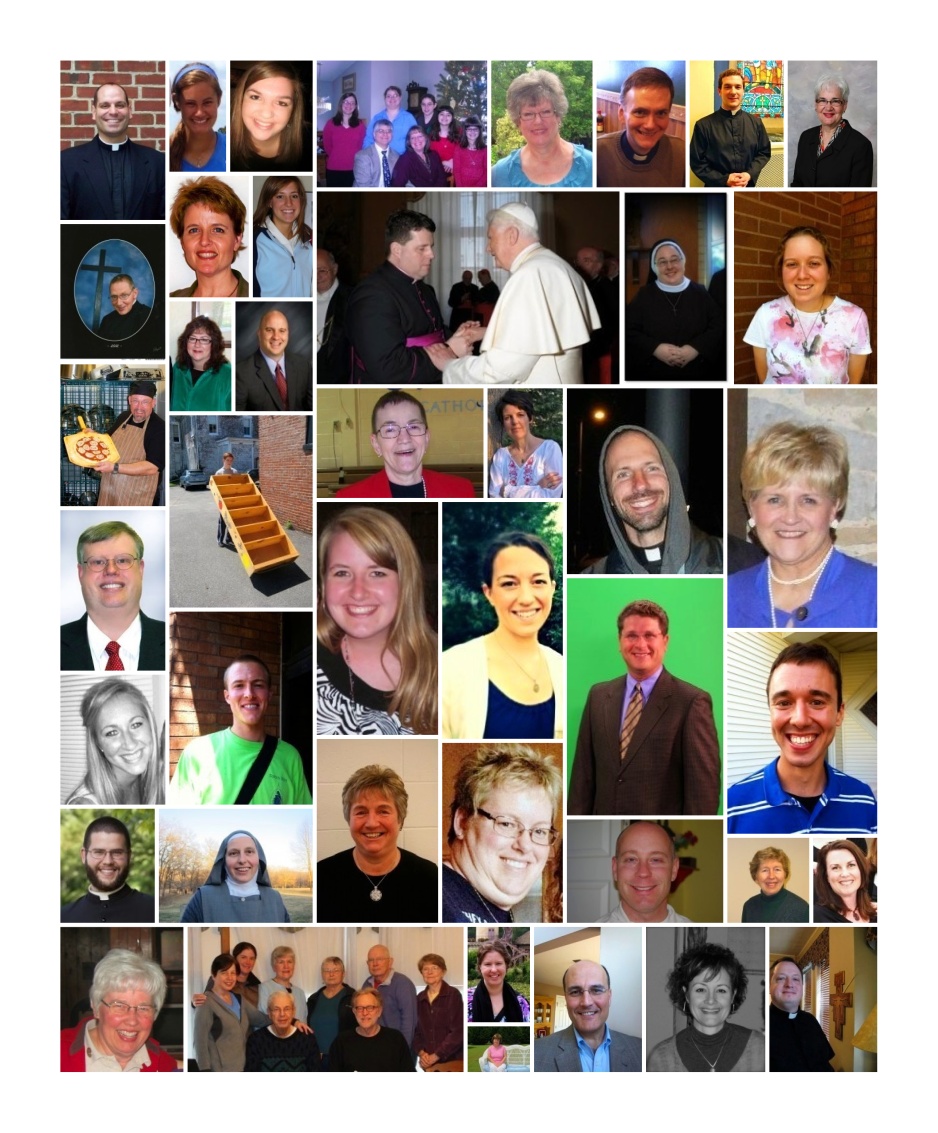
This week’s print edition of The Catholic Post highlights almost all the people who have been gracious enough to be featured as a “Reader.” This feature is a short, four-question interview of a local Catholic and his or her love of reading.

(the four question/prompts? see below)

This collage captures almost all of those featured:

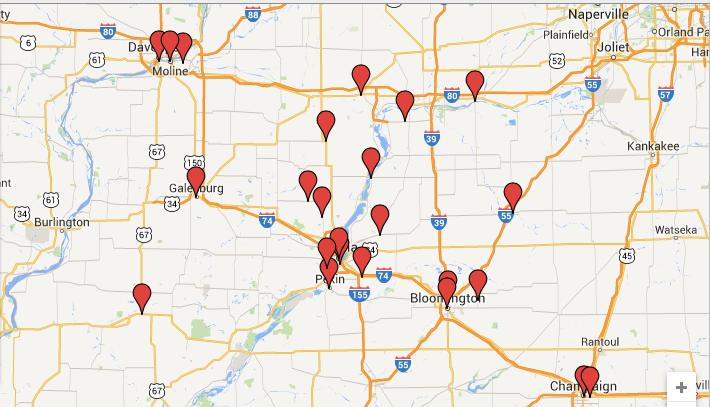
270111549A running conversation I have with Tom Dermody, my editor at The Catholic Post, is that the feature should have people from throughout the diocese.  When I made this “pin map” of all the locations of readers, I was pleasantly surprised that location diversity has been achieved:

Screen Shot 2014-10-29 at 7.34.04 PM

Still, it looks like I need some people in Danville, on the far eastern side of the diocese, and more from around the Macomb area. Any suggestions?

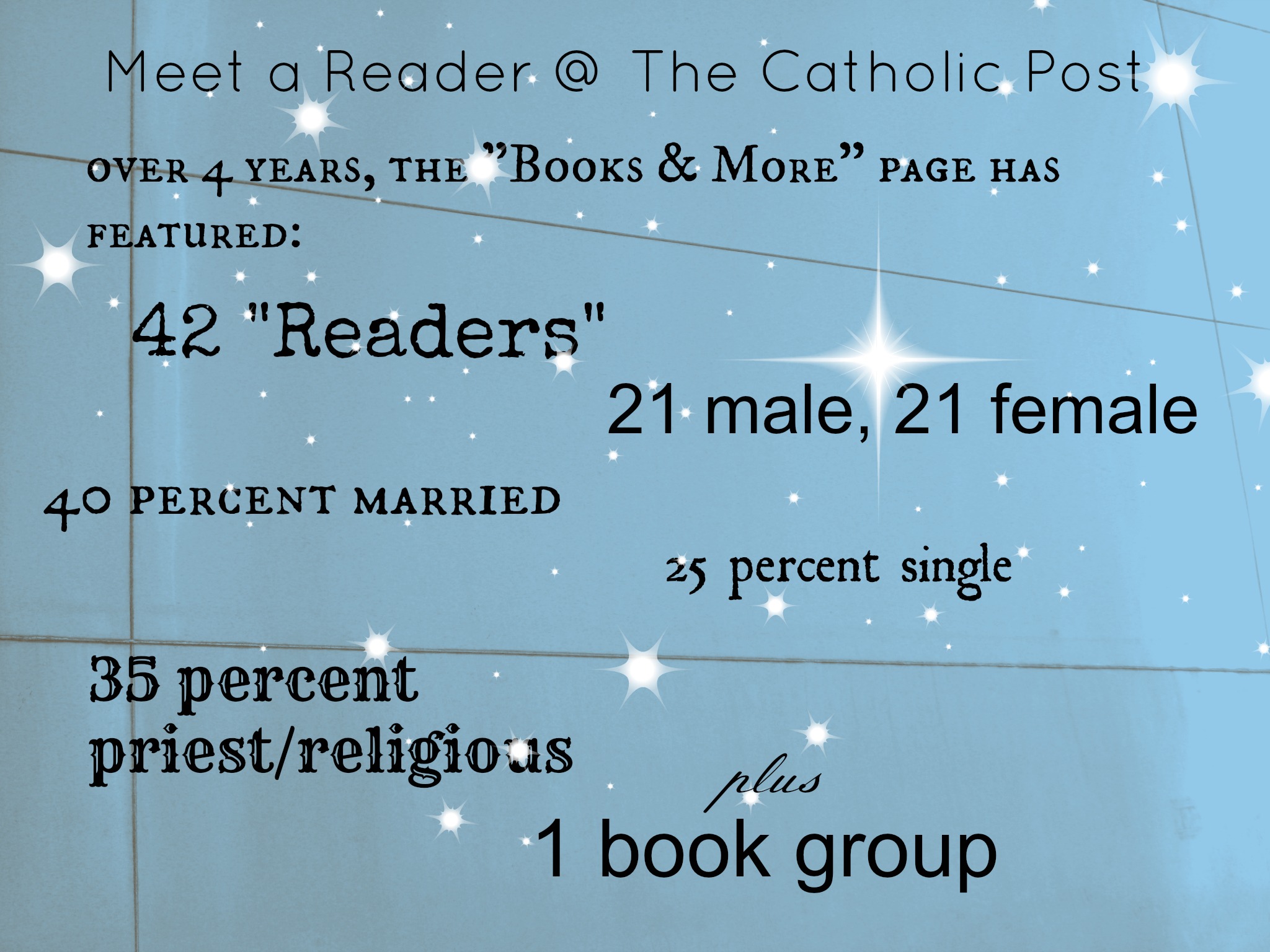
Here’s a mini-infographic I made to highlight the stats of the readers:

Meet a Reader stats

Would you be a good “reader” in The Catholic Post?  I’m hoping by doing this mini-feature about “Meet a Reader,” more people will step forward.  If you’re a Catholic in the diocese of Peoria, will you consider it?

Here are some reasons you shouldn’t say no to being a featured reader:

*You don’t have to  be super-intellectual. (if so, I’d be out of this part-time writing gig).

*You don’t have to read only religious books.  People usually share a mix of religious and non-religious books.  Some people have shared only religious books, but it’s much more common for a reader to feature  both religious and non-religious books.

*You don’t have to be a great writer about your reading or what you love.  I can interview you, or you can write what you’d like.  I’m always pleasantly surprised at how articulate people are about their favorite books and why they love reading.

How do I find readers? Some people reach out to me, but often I find out about others through friends, various events I attend, and other things. I find myself often asking people to consider it, and also asking them to please let me know either way.  Often, someone will sound super-excited, but when I follow up, they decide against it (or, worse, avoid telling me so).  I LOVE when readers reach out to me.

Here are those four quick question/prompts:

How do we (meaning readers here and @ The Catholic Post) know you:

Why I love reading:

What I’m reading now:

My favorite book:

Please leave a comment here if you’d like to be featured, or contact me through the About page here.

Share this:

  • Share on Pinterest (Opens in new window) Pinterest
  • Share on X (Opens in new window) X
  • Share on LinkedIn (Opens in new window) LinkedIn
  • Share on Facebook (Opens in new window) Facebook
  • Email a link to a friend (Opens in new window) Email
  • More
  • Share on Reddit (Opens in new window) Reddit
  • Share on Tumblr (Opens in new window) Tumblr

Like this:

Like Loading...
  • « Go to Previous Page
  • Page 1
  • Interim pages omitted …
  • Page 14
  • Page 15
  • Page 16
  • Page 17
  • Page 18
  • Interim pages omitted …
  • Page 29
  • Go to Next Page »

Copyright © 2026 · Atmosphere Pro on Genesis Framework · WordPress · Log in

  • Home
  • About
  • A Literary Pilgrimage
  • Book Group
%d